
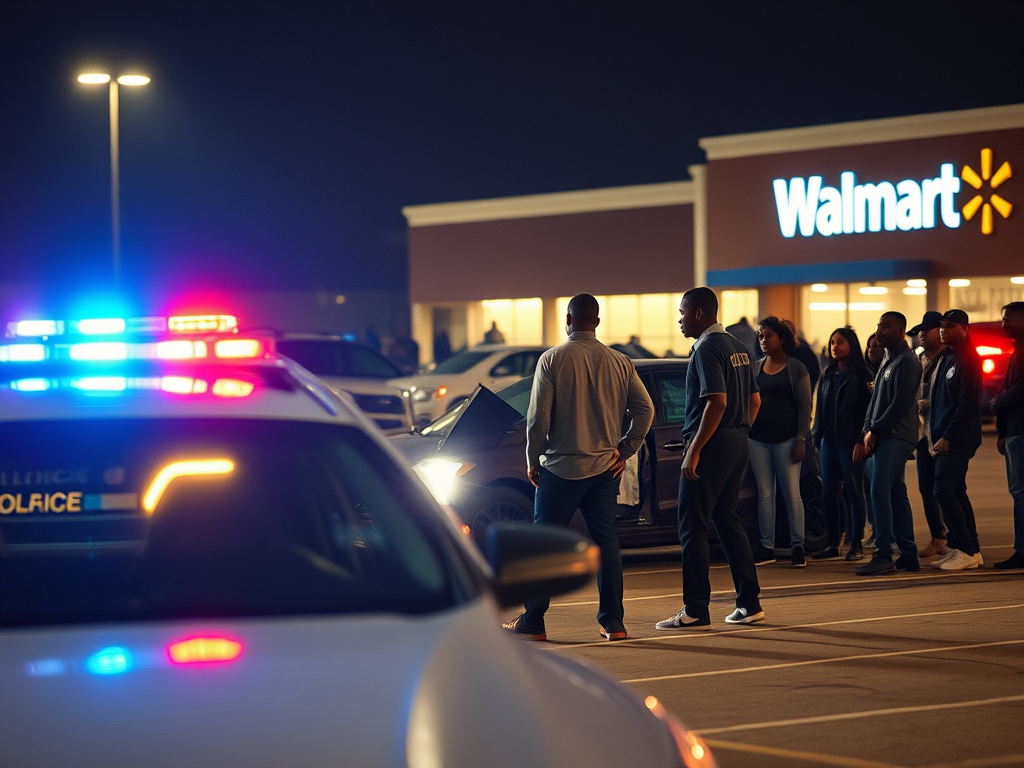
In Johnson v. Wal-Mart Stores East, LP, 389 So.3d 705 (Fla. 5th DCA 2024), the Fifth District considered a case arising out injuries caused when Wal-Mart employees confronted and chased shoplifters, causing the shoplifters to flee and injure the plaintiff, Mr. Johnson.
Wal-Mart moved for summary judgment arguing that it had no duty to protect patrons from fleeing shoplifters because its conduct had not created a reasonably foreseeable “zone of risk,” relying on Kmart Corp. v. Lentini, 650 So. 2d 1031 (Fla. 2d DCA 1995), and Graham v. Great Atlantic & Pacific Tea Co., 240 So. 2d 157 (Fla. 4th DCA 1970).
Mr. Johnson opposed the motion, arguing that Wal-Mart foreseeably increased the zone of risk when it improperly confronted and pursued the shoplifters. Mr. Johnson relied on Wal-Mart’s policies and procedures for dealing with shoplifters as evidence that the risk of harm was reasonably foreseeable.
The trial court concluded, based on the undisputed summary judgment evidence, that Wal-Mart did not create a reasonably foreseeable zone of risk by its employees’ actions, and Mr. Johnson could not rely on Wal-Mart’s policies and procedures as evidence to establish reasonable foreseeability. Mr. Johnson appealed. The Fifth District affirmed the summary final judgment in favor of Wal-Mart, holding that it had not created a foreseeable zone of risk.
Facts
The summary judgment evidence, as argued in Mr. Johnson’s initial brief, was as follows:
On February 1, 2019, Shawnell Pitts and Erica Felder visited the Wal-Mart in Fernandina Beach, Florida, with the intent to shoplift. Wal-Mart employees observed the two shoplifters placing expensive electronic merchandise in old Wal-Mart shopping bags and then putting the bagged merchandise in plastic totes in their cart. A loss prevention employee monitored the two and notified the self-checkout associate.
While Pitts continued his efforts, Felder left the store, covered her license plate with a trash bag, and pulled her car up near the store exit. Pitts then took his shopping cart through the self-checkout area. As he approached, the self-checkout associate placed her hand on the cart and asked him for a receipt. When Pitts gave her a receipt reflecting a transaction for 98 cents, the clerk asked Pitts if he had another receipt and picked up an item in the cart.
At that point, Pitts spun the cart, colliding with other shoppers, exited the store, and jumped in Felder’s car, telling her to “go, go, go.” During this time, Wal-Mart employees either shouted for someone to call the police or indicated that the police had already been called. After Pitts exited the store, Wal-Mart employees walked out of the store and onto the sidewalk, with the hope of capturing a picture of the getaway car’s license tag. There is no summary judgment evidence indicating that any Wal-Mart employee attempted to apprehend or otherwise chase Pitts after he fled.
As this all transpired, Mr. Johnson entered the store. He noticed the commotion, and as a result, exited the store behind both Pitts and the Wal-Mart employees. Upon leaving the store, Mr. Johnson walked into the parking lot, where it is undisputed that Felder struck him with her car.
The summary judgment evidence also included: (1) Wal-Mart’s policies and procedures for interacting with shoplifters, (2) the testimony of Wal-Mart employees, based on their training on Wal-Mart’s policies, indicating that escalating an encounter with a shoplifter can create a “zone of risk,” and (3) the testimony of an expert witness who opined that Wal-Mart escalated the encounter by calling for police and following the shoplifter out to the sidewalk.
The policies and procedures relating to shoplifters set internal rules for Wal-Mart employees aimed, in part, to limit danger that could result from a fleeing shoplifter. For instance, Wal-Mart’s policy prohibits employees from restraining a suspect or pursuing a fleeing suspect more than ten feet from where they began to run. The policies also instruct employees to stay on the sidewalk and not enter the parking lot to avoid hazards from motor vehicles.
Wal-Mart employees testified, based upon their understanding of Wal-Mart’s policies and procedures, that escalating an encounter with a fleeing shoplifter can present a danger to customers. For example, Wal-Mart’s loss prevention employee testified that a shoplifter could use a vehicle as a weapon.
Mr. Johnson’s expert witness testified that calling out for police can “increase their fear of being apprehended and increase the likelihood that they would try to flee.” Although the expert conceded that Pitts was already fleeing before the clerk called out for police, and that he could not say whether calling for police “accelerated [Pitts’] departure or not,” he would advise against “hollering call the police . . . because . . . that’s fuel on the fire.”
Legal Duty: A Fleeing Shoplifter
When considering whether the general facts of a case establish a duty, said the Fifth District, the court’s focus is on whether the defendant’s conduct foreseeably created a broader zone of risk that poses a general threat of harm to others. McCain, 593 So. 2d at 502. This requirement of reasonable, general foresight is the core of the duty element. Id. at 503. Importantly, to establish a duty, the zone of risk created by a defendant’s conduct must have been reasonably foreseeable, not just possible. Graham v. Langley, 683 So. 2d 1147, 1148 (Fla. 5th DCA 1996).
While the causation element of negligence also considers a type of foreseeability, said the court, foreseeability relates to duty and causation “in different ways and to different ends.” McCain, 593 So. 2d at 502. The duty element is concerned with conduct that creates a “generalized and foreseeable risk of harming others,” whereas the causation element is more specific to the case and considers whether “prudent human foresight would lead one to expect that similar harm is likely to be substantially caused by the specific act or omission in question.” Id. at 503.
The Fifth District stated it was only aware of two Florida decisions considering whether a shopkeeper has a duty to protect patrons from a fleeing shoplifter—Lentini and Graham. Given the case specific nature of the duty element analysis, the court concluded that neither case was exactly on point, but both were instructive.
In Lentini, a Kmart loss prevention employee confronted a shoplifter and escorted him to a conference room. 650 So. 2d at 1032. Up to that point, the shoplifter was calm, but when the employee went to call police, the shoplifter “left his chair and ran . . . through the store,” and collided with the plaintiff. Id. A jury found Kmart liable for the plaintiff’s injuries. Id. at 1031.
On appeal, the second district reversed, concluding that Kmart had no duty to the plaintiff. Id. at 1031-32. Specifically, the appellate court reasoned that there was no evidence that “Kmart’s conduct foreseeably created a broader zone of risk that pose[d] a general threat of harm to others.” Id. at 1032 (alteration in original) (citation omitted).
In Graham, the plaintiff alleged that employees of a food market identified a “burly” individual, accompanied by members of his family, who was attempting to take merchandise without paying. 240 So. 2d at 157-58. The employees waited until the family was outside by their car and then confronted them in the parking lot. Id. at 158. The employees allowed the family to leave without recording their license plate number after the suspect agreed to go back inside the store. Id. As they did so, the store manager told the suspect he intended to call the sheriff, and the suspect “broke and ran, knocking down and injuring the plaintiff.” Id. The trial court dismissed the complaint.
On appeal, the district court identified the dispositive question as “foreseeability,” and affirmed the dismissal. In so doing, the court reasoned that based on the plaintiff’s allegations, there was no reason to assume the shoplifter would become violent. Id. at 159. According to the court, “[a]bsent some foreknowledge of danger against which the store might have had time to prepare itself, . . . the defendant did not breach its duty of reasonable care . . . .” Id. Putting a finer point on it, the court explained, “a storeowner is not negligent, absent special circumstances, in attempting to detain suspected shoplifters, and does not create any foreseeable risk of harm . . . by doing so.” Id.
When read together, concluded the court, Lentini and Graham establish that a store has no duty to protect customers from a fleeing shoplifter, at least without some special circumstances indicating danger before the shoplifter flees.
The court then turned to the facts at issue in Johnson.
First, the court rejected Mr. Johnson’s argument that the employee’s action of placing her hand on the cart as Pitts initially approached, asking for a correct receipt, or picking up an item inside the cart, created a reasonably foreseeable zone of risk. First, reasoned the court, given this employee’s job duties, this conduct was rather unremarkable. Second, said the court, all of this occurred before Pitts displayed any aggression or indication that he would flee. In sum, the court concluded the employees in Lentini and Graham, where there was no duty, did substantially more right before the shoplifters fled in those cases. Consistent with Lentini and Graham, the court concluded that Wal-Mart had no duty based on these facts prior to Pitts fleeing.
But what about the conduct of Wal-Mart’s employees after Pitts first became violent, by spinning his cart, striking other customers, and fleeing the store? At that point, Mr. Johnson argued, Wal-Mart had a duty because it created a reasonably foreseeable zone of risk when an employee called for police and when other employees walked onto the sidewalk to record Felder’s license plate number.
The court concluded, however, that Wal-Mart’s conduct after Pitts fled did not create a reasonably foreseeable zone of risk.
First, reasoned the court, there was no indication that calling for the police, after Pitts became violent, enlarged any zone of risk. By the time Wal-Mart’s employee called out for police, Pitts had already not only fled, but also hit other customers with his cart. Even Mr. Johnson’s expert, noted the court, could not say that calling out for police at that point “accelerated his departure.” In short, the court concluded that calling out for police after the shoplifter has not only fled, but done so violently, does not create a reasonably foreseeable zone of risk. In such a case, said the court, the zone of risk is already present, and calling for police does not foreseeably enlarge the zone of risk.
Second, the court rejected Mr. Johnson’s argument that employees exiting the store to stand on the sidewalk also created a reasonably foreseeable zone of risk. Given the record, the court did not agree that simply exiting the store and standing on the sidewalk foreseeably enlarged the zone of risk.
Mr. Johnson’s third argument was based on Wal-Mart’s policies and procedures. He argued that Wal-Mart’s policies and procedures are evidence that “escalating an encounter with a shoplifter” creates a foreseeable zone of risk. But the court was not persuaded by this argument for two reasons:
First, this argument is premised on the notion that Wal-Mart’s conduct “escalated” the encounter with Pitts to begin with—a proposition we reject. As we explained above, based on the facts and argument relied upon by Mr. Johnson on appeal, Wal-Mart did nothing that enlarged the zone of risk.
Second, we are not convinced that internal policies and procedures are all that important to our analysis of Wal-Mart’s legal duty. Mr. Johnson relies on Florida decisions recognizing that internal policies are sometimes admissible at trial, although not dispositive, when they are relevant to the standard of care. See, e.g., Wal-Mart Stores, Inc. v. Wittke, 202 So. 3d 929, 930-31 (Fla. 2d DCA 2016); Mayo v. Publix Super Mkts., Inc., 686 So. 2d 801, 802 (Fla. 4th DCA 1997); see also Disc. Tire Co. v. Bradford, 373 So. 3d 399, 404 (Fla. 5th DCA 2023) (explaining the narrow role that internal policies play in the context of the standard of care). On the other hand, Wal-Mart argues that internal policies are entirely irrelevant to the issue of duty because internal policies will often go above and beyond what is merely reasonably foreseeable.
The court concluded that, given their nature, as well as the potential time and resources available for their formulation, an internal policy can indeed go far beyond what is merely reasonably foreseeable. See, e.g., Disc. Tire, 373 So. 3d at 402 (“Discount Tire’s internal policy went above and beyond and was one step higher than other tire retailers.”); Steinberg By & Through Steinberg v. Lomenick, 531 So. 2d 199, 200-01 (Fla. 3d DCA 1988) (“Therefore, to instruct the jury, as the plaintiffs requested, that a violation of a defendant’s internal rule is evidence of negligence is to give far more weight to the evidence than it deserves; evidence that the rule was violated is not evidence of negligence unless and until the jury finds—which according to the caveat it is free not to do— that the internal rule represents the standard of care.”). Therefore, said the court, even if internal policies might sometimes be relevant (and therefore admissible) when a jury decides compliance with the proper standard of care in a negligence case, the court did not see how a single party’s internal policies are themselves evidence that an alleged tortfeasor’s conduct creates a reasonably foreseeable zone of risk.
Importantly, continued the court:
… in most cases, whether a legal duty exists will not be in dispute. Generally, however, where the duty element is genuinely at issue, and evidence is needed, a party’s internal policies alone will not establish that the conduct in question creates a reasonably foreseeable zone of risk. In other words, absent some evidence to establish that the internal policies themselves, or some specific portion thereof, represent only what is reasonably foreseeable and not what is merely possible, a party’s internal rule seems to be of little value to our legal duty analysis.
All that said, however, the court noted that even if the court were to consider the internal policies, as Mr. Johnson invited the court to do, the question of duty remains one of law for the court. Thus, at a minimum, an internal rule is in no way controlling in a court’s analysis of whether a legal duty exists. See generally Dominguez v. Publix Super Mkts., Inc.,187 So. 3d 892, 895 (Fla. 3d DCA 2016) (stating, in the context of the standard of care, “[i]f what [the Publix assistant grocery manager] did, under the circumstances and within the five seconds he was allotted by fate, was reasonable and demonstrated ordinary care, then the fact he allegedly did not abide by Publix’s internal operating procedure of blocking off the aisle does not create a heightened duty of care in favor of Dominguez”).
In sum, the court concluded that Wal-Mart’s policies did not change the disposition. Instead, the court read the internal policies to go above and beyond what is merely reasonably foreseeable. The internal policies did not themselves evidence a legal duty to protect Mr. Johnson from fleeing shoplifters.
What about the testimony of Wal-Mart employees? Mr. Johnson argued that the testimony of Wal-Mart’s employees showed they recognized the risk of harm. While it was true, said the Court, that some of Wal-Mart’s employees testified that there was a risk of harm when employees escalate an encounter with a shoplifter, this testimony was in the context of questions about Wal-Mart’s policies and procedures. But the court had already held that Wal-Mart’s policies and procedures did not establish a legal duty. Wal-Mart’s employees’ testimony based on those policies, therefore, did not establish a legal duty either.
The court affirmed the trial court’s entry of final summary judgment because Wal-Mart’s conduct did not create a reasonably foreseeable zone of risk. Wal-Mart, therefore, had no legal duty to protect Mr. Johnson from fleeing shoplifters.
THE DISSENT
The opinion included an interesting dissent. The dissent presented a slightly different recitation of the facts:
On a Friday evening in February 2019, local bait and tackle shop owner and frequent Walmart shopper, Frederick Johnson, fled the retail chain’s Fernandina Beach store in fear due to a fracas inside between a shoplifter and store employees, but was run over and seriously injured in the storefront crosswalk by the getaway car moments later. The employees, rather than defuse the situation inside the store, escalated the risk to customers and other employees, triggering the shoplifter’s dash to the parking lot and patrons, like Johnson, to hastily exit the store. Employees incited the shoplifter via a checkout counter confrontation that involved attempts to snatch items from the shoplifter’s cart, a physical altercation, a store employee yelling for the police, and others pursuing the shoplifter out of the entrance.
Johnson sued Walmart, said the dissent, claiming it acted negligently under the circumstances by creating a foreseeable risk of harm arising from the encounter with the shoplifter. The trial court ruled, however, that Walmart had no legal duty to protect customers from fleeing shoplifters, even if Walmart employees improperly skirmished with the shoplifter and escalated the encounter, thereby increasing the risk of flight and harm to others. It granted final summary judgment on that basis, after multiple rounds of legal briefing just prior to trial.
Because the factual record established that Walmart created a foreseeable risk that customers or employees could be injured by the admittedly ill-advised escalation of the potentially dangerous situation, concluded the dissent, a legal duty existed. As such, said the dissent, Johnson was entitled to prove that Walmart was negligent by escalating the situation; the foreseeability of the actual injury Johnson sustained, i.e., being run over by the getaway car, was a question of proximate cause for the jury to decide.
The central issue in this negligence case, said the dissent, was a purely legal one: whether Walmart owes a legal duty to protect its customers and employees from potential harm based on the facts presented, which involve employees escalating a confrontation with a suspected in-store shoplifter. The dissent set forth Florida law regarding legal duty:
Our supreme court recognizes at least four sources of a legal duty: “(1) legislative enactments or administration regulations; (2) judicial interpretations of such enactments or regulations; (3) other judicial precedent; and (4) a duty arising from the general facts of the case.” McCain v. Fla. Power Corp., 593 So. 2d 500, 503 n.2 (Fla. 1992) (citing Restatement (Second) of Torts § 285 (1965)) (emphasis added). As in McCain, this case predominantly deals with “the last category—i.e., that class of cases in which the duty arises because of a foreseeable zone of risk arising from the acts of the defendant.” McCain, 593 So. 2d at 503 n.2 (emphasis added). The italics emphasize that the judicial analysis of whether a duty exists focuses on whether a defendant’s acts—here, those of Walmart’s employees escalating the shoplifting incident into a scuffle and melee—created a “foreseeable zone of risk” for which a legal duty exists to protect others from harm.[2] Every defendant “who creates a risk is required to exercise prudent foresight whenever others may be injured as a result. This requirement of reasonable, general foresight is the core of the duty element.” Id. at 503 (emphasis added).
The judicial inquiry in this case, said the dissent, was whether the “general facts of the case” created a foreseeable zone of risk to customers or others. See Williams v. Davis, 974 So. 2d 1052, 1056 (Fla. 2007) (citing McCain, 593 So. 2d at 503) (“[T]he determination of the existence of a common law duty flowing from the general facts of the case under our negligence law depends upon an evaluation of the concept of foreseeability of harm.”). To make this legal determination, a “court must make some inquiry into the factual allegations. The objective . . . [is] to determine whether a foreseeable, general zone of risk was created by the defendant’s conduct.” McCain, 593 So. 2d at 502 n.1. If the facts—construed in Johnson’s favor—demonstrated that Walmart’s conduct created a foreseeable risk of harm, a legal duty existed, and he was entitled to sue for negligence. As a corollary, said the dissent, the trial and appellate courts cannot find a lack of duty if a foreseeable zone of risk more likely than not was created by the defendant. Id. at 503.
The existence of a legal duty, however, is only a starting point and a yardstick by which to measure a defendant’s conduct. As McCain points out, a “duty exists as a matter of law and is not a factual question for the jury to decide: Duty is the standard of conduct given to the jury for gauging the defendant’s factual conduct.” Id. The existence of a legal duty does not mean a plaintiff automatically wins; to the contrary, a plaintiff must prove via evidence and persuasion that a breach of a duty occurred.
The dissent next turned to the question of whether a duty to protect customers existed on the facts presented.
The supreme court in McCain said,
“Florida, like other jurisdictions, recognizes that a legal duty will arise whenever a human endeavor creates a generalized and foreseeable risk of harming others.” 593 So. 2d at 503. In this regard, Florida law has long recognized the general duty of a business to make its premises safe and to protect its customers from foreseeable harm. Hall v. Billy Jack’s, Inc., 458 So. 2d 760, 761 (Fla. 1984) (A business owes its “visitors a duty of reasonable care for their safety” but “is not required to protect the patron from every conceivable risk; he owes only a duty to protect against those risks which are reasonably foreseeable.”); see also Budet v. K-Mart Corp., 491 So. 2d 1248, 1250 (Fla. 2d DCA 1986) (K-Mart owed an invitee “a duty to exercise reasonable care for her safety” by exercising “ordinary care to keep its aisles and passageways in a reasonably safe condition” and “eliminating dangerous conditions of which it has actual or constructive notice.”); Walker v. Feltman, 111 So. 2d 76, 78 (Fla. 3d DCA 1959) (“A proprietor is not an insurer of the safety of his customers but is charged with the duty of maintaining his premises in a reasonably safe condition and guarding against subjecting a customer to dangers of which the proprietor is cognizant or might reasonably foresee.”). This general duty applies to any retailer, including Walmart, who makes their premises open to the public; if a foreseeable risk of harm to customers exists, a duty exists on the retailer to act reasonably in protecting against its breach by reducing or eliminating the risk. See generally,Tammy E. Hinshaw & Thomas Muskus, 38 Fla. Jur. 2d, Negligence § 30 (2023) (“Where a defendant’s conduct creates a foreseeable zone of risk, the law generally will recognize a duty placed upon the defendant, either to lessen the risk or see that sufficient precautions are taken to protect others from the harm that the risk poses.” (footnote omitted)).
This general duty, said the dissent, applies to businesses like Walmart in a multitude of factually diverse situations. For example, it applies to a store’s responsibility to make sure that patrons are not injured by children running amok in its aisleways. Kolosky v. Winn Dixie Stores, Inc., 472 So. 2d 891, 893 (Fla. 4th DCA 1985) (noting that “three children were observed running unsupervised through the store aisles several times over the course of approximately thirty to forty-five minutes”). It also applies to a store ensuring that customers are not injured by unwieldy oversized carts (aka floats). Budet, 491 So. 2d at 1250 (A department store owed a business invitee “a duty to exercise reasonable care for her safety.”). It applies to harm caused by foreseeable criminal conduct, such as a bar that “was a `rough’ place with a history of fights and gunplay” that “terminated all security service,” causing disorder. Stevens v. Jefferson, 436 So. 2d 33, 35 (Fla. 1983); Allen v. Babrab, Inc.,438 So. 2d 356, 357-58 (Fla. 1983) (Evidence that showed that a business had “a history of fighting and other disturbances” and had a previous security policy that was no longer in place was sufficient to reasonably find that the business owner “should have known of the likelihood of injury to patrons caused by disorderly conduct on the part of third parties in general[.]”). In these and many other situations, said the dissent, a business has a duty to act reasonably to lessen the risk or protect its customers from foreseeable harm.
It bears emphasis, noted the dissent, that foreseeability has a two-fold role in tort law, each role playing distinctively different functions that are often confused. First, as just discussed, the foreseeability of a risk determines whether a legal duty exists, which is the central focus in this appeal. Second, foreseeability plays a related but different role in determining whether a breach of a legal duty resulted in the actual harm that was caused—so-called proximate causation. As the supreme court in McCain said:
foreseeability relates to duty and proximate causation in different ways and to different ends. The duty element of negligence focuses on whether the defendant’s conduct foreseeably created a broader “zone of risk” that poses a general threat of harm to others. The proximate causation element, on the other hand, is concerned with whether and to what extent the defendant’s conduct foreseeably and substantially caused the specific injury that actually occurred.
593 So. 2d at 502 (internal citation omitted). Relevant to the instant case, said the dissent, the supreme court made clear that the duty element of negligence “is a minimal threshold legal requirement for opening the courthouse doors, whereas the latter is part of the much more specific factual requirement that must be proved to win the case once the courthouse doors are open.” Id. It was this minimal legal threshold–the duty element–that was at issue.
The dissent noted that it is well-established that Walmart and other retailers have a general duty to make their premises safe and to protect their customers from foreseeable risks of harm, such as criminal conduct occurring within their stores and on their properties. See, e.g., Stevens, 436 So. 2d at 34; Levitz v. Burger King Corp., 526 So. 2d 1048, 1049 (Fla. 3d DCA 1988); see also Thomas v. Circle K Stores, Inc., No. 8:19-cv-2817-JSS, 2021 WL 3134781, at *4 (M.D. Fla. May 26, 2021). When foreseeable criminal conduct occurs, such as shoplifting, it is self-evident that these potentially dangerous situations should not be escalated unreasonably because they can result in foreseeable harm to customers or employees. This principle is a matter of common sense and consistent with the legal requirement that defendants must lessen rather than escalate risks where their conduct foreseeably could cause harm. Kaisner v. Kolb, 543 So.2d 732, 735 (Fla. 1989) (“Where a defendant’s conduct creates a foreseeable zone of risk, the law generally will recognize a duty placed upon defendant either to lessen the risk or see that sufficient precautions are taken to protect others from the harm that the risk poses.”).
This non-escalation principle, said the dissent, was repeatedly mentioned in the testimony of Walmart’s employees, as well as Johnson’s expert report and testimony. Further, said the dissent:
… it was also a basis for the shoplifter to skedaddle from the store, the getaway driver to panic and hasten her exit from the parking lot, and for Johnson to flee the store in fear. It is well-established that a legal duty exists to use due care in a manner that protects customers when shoplifting occurs on the premises and flight results. See, e.g., 62A Am. Jur. 2d Premises Liability § 540 (2023) (“Consistent with the rule that once a robbery is in progress, a store owner must use reasonable or due care to protect his or her customers from foreseeable harm” and “a customer who is injured while a shoplifter is being pursued by the store owner or his or her employees may be entitled to recover from the owner where, under the circumstances, the store owner breached a duty of care to the customer because of the manner in which the shoplifter was pursued.”); Louis A. Lehr, Jr., 3 Premises Liability 3d, Shoplifting pursuits § 45:5 (2022) (surveying numerous cases involving fleeing shoplifters injuring customers, most imposing a duty where the harm was foreseeable).
The dissent concluded that, consistent with McCain, the facts—construed in Johnson’s favor—demonstrated the basis for a duty to protect customers (and employees) by not escalating these types of situations. The testimony of Walmart employees, Johnson’s testimony, the expert report and testimony, and the evidence of what occurred (including the video showing the shoplifter’s flight, the pursuit by Walmart employees, and Johnson being run over while fleeing the store), concluded the dissent, established why a legal duty existed under the factual circumstances presented. The dissent reasoned:
Walmart was aware that a shoplifting event was in progress. The store’s asset protection manager had surveilled the shoplifting suspects, Pitts and Felder, and concluded that Pitts should be intercepted, and a receipt sought (Felder had left the store and was in the parking lot covering up the getaway car’s license plate). The manager recognized that confrontation of a shoplifter could present a danger to customers and employees, including serious injuries, if handled improperly. She nonetheless contacted a self-checkout host—who lacked authority to stop or make accusations toward suspects—to be on the lookout for Pitts as he approached the front of the store.
Rather than de-escalate the situation, said the dissent, the opposite occurred. By her own testimony, the self-checkout host—who was not authorized to surveil or detain shoplifting suspects—had no training and had never been involved in a shoplifting event before. Nonetheless, after Pitts had already gone beyond the checkout registers, she engaged him with “aggressive hospitality,” a phrase she coined for how she personally deals with these types of situations. She asked for a receipt but when Pitts failed to produce one reflecting the items in his cart, she started “pulling stuff out of his bags” and then pushed the cart forward aggressively. Because she was holding the cart, the self-checkout host’s hand was twisted and injured (“All my fingers was bruised.”). She yelled out “Call the police” and then followed Pitts out the exit, stopping at the sidewalk for safety reasons and the potential to be hit by a vehicle (“Because we could get hurt or someone else get hurt. . . . you’re walking into traffic, more or less.”).
Further, reasoned the dissent, the asset protection manager noted that pursuit into the traffic or parking area is disallowed because it is potentially more likely that the getaway car is going to flee and injure someone. Indeed, in addition to Johnson’s injury, said the dissent, one witness indicated that the getaway car was “floored,” leading her to believe the driver was intentionally trying to hit Johnson; the car exited the parking lot going in the wrong direction, nearly hitting another car.
Other testimony, said the dissent, established that the self-checkout host caused a scene by grabbing at Pitts’s arm and yanking it:
(“Now, it’s starting to be a scene because the [Walmart] lady and him are tugging for the bags that’s in his arm,” resulting in “a crowd starting to form” with people coming “out of the Walmart watching” the struggle). People were “running outside” as Pitts was “fighting with the lady,” while many gathered outside the doorway, “probably in the 20-30 range.” A mom shopping with her son said that Pitts “suddenly pushed [the mom] out of the way to run to the door, almost knocking her down.” The “Walmart lady” was “screaming” to others that “it’s them, it’s them,” leading Felder, at the wheel of the getaway vehicle, to believe that police would soon arrive. Pitts “literally walked out like nothing was the problem until the lady said, that’s him, that’s her,” when his pace quickened, and he ordered Felder to flee the scene.
Even Felder, who was waiting for Pitts and drove the getaway car, said the dissent, understood the risk of foreseeable harm from escalating the situation. Several Walmart employees followed Pitts out of the building, some with walkie-talkies in hand, some in plain clothes. All this commotion caused Felder to panic, wondering why her accomplice, Pitts, was not hastening his exit fast enough. He arrived, telling her to “go, go, go” because “they done already called the police.” According to Felder, there “was just too much going on. . . I didn’t know what to do, so I just took — I just went. I didn’t want to get caught . . . but it was just kind of like too much going on.”
Johnson’s security expert, said the dissent, reviewed all the employee depositions, industry safety literature, Walmart’s policy, and Johnson’s testimony. Based upon his review of this factual background, he opined that Walmart engaged in “significant deficiencies” that “reflect a lack of conformity with Wal-Mart’s voluntary standards as established in their policy and training manuals, standards that are consistent with widely-accepted industry practices and published guidelines, as noted [in the expert report].” (Emphasis added). The emphasized language reflects that Walmart’s policies were not sui generis or unique; they were merely like those prevailing in the retail community and were “generally consistent with published guidance regarding responses to suspected shoplifting” for which three books from the literature on loss prevention and shoplifting management was cited.
The security expert, noted the dissent, concluded that Walmart “was aware that situations involving confrontation of shoplifting suspects, and situations involving a suspect fleeing in a vehicle, created a risk of injury to associates, customers, and suspects. In addition, the self-checkout host “failed to adequately prioritize safety, and failed to act appropriately to reduce the risk of harm arising from the encounter with shoplifting suspect Mr. Pitts.” She lacked authorization to engage Pitts, was untrained in dealing with shoplifting situations, and was inappropriately confrontational. Her misconduct was the only evidence of what “provoked Mr. Pitts to become aggressive and flee. Only after she impeded his departure by grabbing the cart and pulling items out did his demeanor shift toward violence.” It was also the only evidence that “prompted Mr. Johnson to leave the subject store in fear immediately after he arrived.” He concluded that Johnson’s injury was “exactly the type of incident” that was preventable and could be avoided had accepted industry standards been followed.
The dissent also noted:
Judicial opinions in a multitude of Florida business liability cases over the past sixty-five years reflect the ever-evolving nature of what constitutes a foreseeable risk of harm in the factual context of each case. The central question in each case is whether a foreseeable risk of harm was shown at the time each case was decided under the specific facts presented.
For example, it was held almost sixty-five years ago that a shopkeeper has the legal duty to not create a situation that creates a risk of harm arising from announcing “Go!” to a large group of restive and unruly shoppers who rushed into the store to get limited merchandise on sale. Walker, 111 So. 2d at 77. In concluding that an injured patron could sue the shopkeeper in tort, the court stated that “[o]ne does not have to indulge in speculation to foresee the results of such action.” Id. at 78. The court noted that “instead of controlling the crowd, the defendants’ employee further incited it by shouting a signal usually associated with a foot race.” Id. at 79.
Likewise, said the dissent:
… one does not have to indulge in speculation to foresee the results of confronting and pursuing a shoplifter out of the store while yelling, “Call the Police!” A foreseeable risk of harm to consumers and employees is the natural commonsense result. The risk arises not just from the foreseeability of the shoplifter’s and getaway driver’s flight, but also from the foreseeability of the confluence of patrons fleeing the building in alarm. All too often images of people fleeing businesses or venues are recorded where someone has yelled out or an alarming sound is heard. Which is why no right exists to falsely yell “Fire!” in a crowded movie theatre; to do so is to create a foreseeable risk of harm. Schenck v. United States, 249 U.S. 47, 52 (1919) (“The most stringent protection of free speech would not protect a man in falsely shouting fire in a theatre and causing a panic.”).
From the legions of cases, lamented the dissent, the trial court relied exclusively on just two, both involving shoplifters, one from 1995 and one from 1970. Both were factually distinguishable, said the dissent, and neither accounted for the development over the past fifty years of contemporary protocols for dealing with retail shoplifting scenarios; indeed, said the dissent, the actions of the shopkeepers in both cases were inconsistent with current practices in handling suspected shoplifters. Moreover, reasoned the dissent, even if factually similar, neither case was binding precedent on the court, because each was decided by another district court of appeal. See Pardo v. State, 596 So. 2d 665, 667 (Fla. 1992). Most importantly, wrote the dissent, both cases demonstrate that:
… as long ago as 1970 a foreseeable risk of harm exists from pursuing or attempting to detain suspected shoplifters. Mishandling active situations involving shoplifting poses safety and security concerns that tip decidedly in favor of de-escalation and the involvement of adequately trained personnel and law enforcement versus what occurred in this case.
The trial court, said the dissent, relied on a case decided over a half-century ago, Graham v. Great Atlantic & Pacific Tea Co., Inc., 240 So. 2d 157, 157 (Fla. 4th DCA 1970), which addressed whether a food market had a legal duty, under the circumstances and law then prevailing, to shield invitees from a shoplifter who broke free and ran, injuring a patron. The manager suspected shoplifting and detained a “burly” man and his family near their car. Id. at 157-58. He permitted the wife and child to leave “after the suspect voluntarily agreed to accompany the manager back inside the store. As they were walking in, the manager apparently told the suspect that he intended to call the sheriff, and the suspect broke and ran, knocking down and injuring the plaintiff, who was still completing her business.” Id. at 159. The appellate court, deciding the case twenty-two years prior to the supreme court’s decision in McCain, held that unless the food market “should reasonably have anticipated violence on the part of the suspected shoplifter, then clearly it had no duty to take the extraordinary safety measures alleged by plaintiff to have been negligently omitted.” Id. (emphasis added).
Unlike the instant case, said the dissent, no employee in Graham shouted out “Call the Police” or the like; and no employee followed the fleeing shoplifter outside the store. Notably, concluded the dissent, the court in Graham indicated that a duty would exist if “some foreknowledge of danger [existed] against which the store might have had time to prepare itself.” 240 So. 2d at 159. Since Graham, decided fifty-three years ago, noted the dissent, the retail industry has had such “foreknowledge” for decades:
The industry knows that a foreseeable risk of harm exists in active shoplifting scenarios, that this risk increases due to escalation rather than de-escalation, that adopting detailed safety protocols are necessary to protect customers and employees. A duty thereby exits under McCain because a retailer’s escalation in such circumstances “foreseeably create[s] a broader `zone of risk’ that poses a general threat of harm to others.” McCain, 593 So. 2d at 502. In short, Graham is factually distinguishable and outmoded under modern retail safety protocols, as the facts in this case demonstrate.
Next, noted the dissent, the trial court relied on the Second District’s one-page decision in Kmart Corp. v. Lentini, 650 So. 2d 1031, 1031 (Fla. 2d DCA 1995), which cited Graham. In Lentini, a “suspected shoplifter was spotted by one of Kmart’s department managers,” resulting in the loss prevention manager confronting and detaining him in a conference room; a department manager and an assistant manager remained outside the conference room door. Id. at 1032. When the loss prevention manager went to call the police, the shoplifter—who had been cooperative—”suddenly left his chair and ran out of the conference room and through the store, colliding with the plaintiff” who “suffered a knee injury.” Id. The jury’s verdict in the plaintiff’s favor was reversed because the Second District concluded that the “record does not show that, in apprehending and detaining the shoplifting suspect, Kmart’s `conduct foreseeably created a broader `zone of risk’ that pose[d] a general threat of harm to others.’” Id. (citing McCain). As such, there “was no breach of any duty owed to the plaintiff by Kmart.” Id.
Unlike the present case, said the dissent, Lentini involved the apprehension and detention of a shoplifting suspect by store personnel and is thereby factually distinguishable; there was no indication that the shoplifter in Lentini was pursued by a store employee who yelled out for law enforcement. Walmart did not seek to apprehend or detain Pitts because doing so was dangerous and disallowed. The record evidence shows that attempts by store personnel (versus trained law enforcement) to apprehend or detain suspected shoplifters are impermissible and frowned upon industry-wide due to the well-established risk of harm that doing so entails. Indeed, Walmart’s own safety policy does not condone what occurred in Lentini, which is simply an outdated precedent inconsistent with contemporary security and safety protocols.
Moreover, said the dissent, no Florida court has followed Lentini, while other courts have distinguished it and found a legal duty exists on facts substantially the same as this case. For example, said the dissent, in Walmart Stores East, L.P. v. Ankrom, 854 S.E.2d 257, 264 (W. Va. 2020), the plaintiff-customer was injured in an in-store collision with a fleeing shoplifter who was pursued by store employees attempting to apprehend him. The case involved the same Walmart safety policy (AP-09) at issue in this case. The West Virginia Supreme Court held that “a reasonable juror could have concluded that in this case Wal-Mart employees exposed [the plaintiff] to a foreseeable high risk of harm in the course of apprehending [the shoplifter] and, therefore, that Wal-Mart owed a duty to [the plaintiff] to protect her from his criminal conduct.” Id. at 270. The court distinguished and did not follow Lentini,noting that the case involved a shoplifter who “submitted to store employees’ initial requests to follow them to a security office or other location inside the store,” which was not what happened in Ankrom. Instead, what happened—like here—the store employees’ conduct resulted in a “struggle” and a “scuffle” that created a foreseeable risk of harm. Id. at 272.
Likewise, observed the dissent, in Fischer v. Home Depot U.S.A., Inc., No. 3:18-cv-00226-SLG, 2019 WL 4131699, at *1 (D. Alaska Aug. 30, 2019), a case with similarities to this case, the federal court distinguished Lentini. A Home Depot employee notified the store’s supervisor of a potential shoplifter. As the suspect moved toward the store’s entry vestibule, the supervisor asked twice for a receipt, but the shoplifter continued moving to the exit, setting off the store’s alarm system. The supervisor asked for a third time to see a receipt upon which the “shoplifter then ran out the store’s entrance. At the threshold of the exterior doors, the shoplifter collided with [the plaintiff], who fell to the ground and broke her fingers.” Id. The plaintiff said she heard someone yelling to “stop, bring it — that back” just before the collision. Id.
The federal court’s task was to determine if the facts of the case supported a legal duty under Alaska negligence law. In concluding that one existed, the court noted that “it is foreseeable that a shoplifter would attempt to flee when pursued or when pursuit appears imminent, and that the shoplifter’s attempt to avoid apprehension could result in injury to bystanders.” Id. at *5. Moreover, Home Depot’s shoplifting policies “suggest that Home Depot already recognized the risks that such pursuit poses to bystanders and attempted to minimize those risks.” Id. It determined that “a reasonable jury could conclude that [the supervisor’s] actions caused the shoplifter to bolt and collide into [the plaintiff], and that this constituted a breach of Home Depot’s duty of care to [the plaintiff].” Id. at *6. The court specifically rejected Lentini because—unlike in the present case—there “was no indication that the shoplifter [in that case] was pursued by any store employee.” Id.[4]
In summary, said the dissent, the facts in the instant case established a legal duty to not unreasonably escalate the risk of harm in shoplifting situations. The dissent reasoned:
Escalation increases the risk of harm to customers/employees; indeed, a Walmart employee was slightly injured, and Johnson was severely injured as a result. The testimony of Walmart employees, expert testimony including an expert report citing industry literature, and the videos of what occurred fully support the existence of a legal duty, which is not based exclusively on Walmart’s policy, as the next section discusses.
What significance, if any, did the dissent assign to Wal-mart’s safety policy? The trial court, said the dissent, characterized Johnson’s tort claim as premised entirely on a breach of Walmart’s safety policy, AP-09, which was inaccurate. The record, said the dissent, contained “plentiful evidence establishing the basis for a legal duty to protect customers and to deescalate shoplifting situations without reference to Walmart’s safety policy.”
That said, said the dissent, the trial court was not required to ignore Walmart’s policy entirely; instead, it could consider it as relevant evidence in making a judicial judgment about the existence of a legal duty. The policy, said the dissent, does not set the legal duty; but it is relevant in making the judicial determination of what legal duty, if any, exists when conduct foreseeably creates a zone of risk that may harm customers and others.
To start, reasoned the dissent, judicial precedents hold that a legal duty may not be based solely upon the existence and terms of a company’s own policy; to do so creates a disincentive for companies to undertake greater levels of care than are legally required. See Steinberg ex rel. Steinberg v. Lomenick, 531 So. 2d 199, 201 (Fla. 3d DCA 1988) (Baskin, J., concurring) (“[A] contrary result would discourage the voluntary setting of standards higher than those customarily employed in the community.”). Just as the law doesn’t punish a company for taking subsequent remedial measures after an accident, see § 90.407, Fla. Stat. (2023), it likewise doesn’t impose a legal duty in tort based solely on a company’s safety policy, see K-Mart Corp. v. Kitchen, 662 So. 2d 977, 979 (Fla. 4th DCA 1995) (“Imposition of a legal duty on a retailer on the basis of its internal policies is actually contrary to public policy. Such a rule would encourage retailers to abandon all policies enacted for the protection of others in an effort to avoid future liability.” (citation omitted)), decision quashed on other grounds, 697 So. 2d 1200 (Fla. 1997).[6]
Although a legal duty cannot be based exclusively on a company’s safety policy, said the dissent, a court can consider relevant portions of a safety policy in determining the contours of a negligence claim. It is uniformly held, said the dissent, that a company’s policy setting standards for employees to follow is relevant evidence of the standard of care. See, e.g., Wal-Mart Stores, Inc. v. Wittke, 202 So. 3d 929, 930-31 (Fla. 2d DCA 2016)(“Internal policies and procedures may be admissible if they are relevant to the standard of care[.]”); Mayo v. Publix Super Markets, Inc., 686 So. 2d 801, 802 (Fla. 4th DCA 1997) (recognizing that “safety rules and procedures established by a party to govern the conduct of its employees are relevant evidence of the standard of care”); Metro. Dade Cnty. v. Zapata, 601 So. 2d 239, 244 (Fla. 3d DCA 1992)(“Rules made by a defendant to govern the conduct of employees are relevant evidence of the standard of care.”); Steinberg, 531 So. 2d at 200 (“Concededly, rules made by a defendant to govern the conduct of employees are relevant evidence of the standard of care. Indeed, this court has held that a party’s internal policies and procedure are admissible as some evidence of the appropriate standard of care.” (internal citations omitted)); see also Disc. Tire Co., 2023 WL 7228186, at *3 (noting that internal policy is relevant to standard of care but does not by itself create the standard).
A standard of care, said the dissent, is the degree of care a reasonable person should exercise to avoid harm to others; it does not establish a legal duty, but it is relevant in deciding if a legal duty exists. For example, said the dissent, if a company is aware of a foreseeable risk of harm to others arising from its conduct, its safety policy—while not an exclusive basis for a legal duty—may be relevant in the judicial calculus of whether a legal duty exists under the circumstances. A common misnomer, according to the dissent, is that a company immunizes itself from negligence claims simply by adopting a safety policy and arguing that its standards cannot be the basis for a legal duty in tort. That, said the dissent, is incorrect. The rule, said the dissent, is this:
If a policy’s standards are the same or consistent with those justified by regulations, industry norms, or the facts of a case, McCain, 593 So. 2d at 503, a claimant can assert a breach of those standards notwithstanding they are contained in a company’s policy. Stated differently, a company’s adoption of safety standards doesn’t shield the company from tort liability if those standards independently prevail in the community or are justified by the facts in a specific case; universal tort immunity would result if the law was otherwise.
In the instant case, said the dissent, many portions of Walmart’s safety policy directly addressed the risk of escalating situations involving shoplifting and thereby established the foreseeability of such risks:
The policy clearly established that Walmart understood that confronting shoplifting suspects elevates the risk of harm to customers and employees. Employees must disengage and withdraw from potentially dangerous situations and avoid confrontations; attempting to recover property is secondary to the safety of customers. The policy reflects Walmart knew of and established protocols because of the foreseeability of harm that would otherwise result from non-compliance. These portions of the policy are relevant, not to impose them as substantive legal standards (though they could be if prevailing in the industry), but to demonstrate that a known risk of foreseeable harm existed in these types of shoplifting situations for which a duty to protect customers and employees exists. Johnson presented testimony and evidence establishing that a legal duty exists in this type of case and was entitled to present Walmart’s safety policy as relevant in the trial court’s determination of whether a legal duty exists and the standard of care.
In conclusion, the dissent wrote:
… the record evidence established that Walmart had a legal duty to protect customers and employees from the foreseeable risks of escalating encounters with shoplifters, which increases the risks of flight and harm. Under supreme court precedent, if a defendant’s conduct foreseeably creates a zone of risk posing a threat of harm, a legal duty exists in a negligence action. The supreme court made clear over thirty years ago that the question of duty “is a minimal threshold legal requirement for opening the courthouse doors,” placing the burden on plaintiffs to prove facts that “win the case once the courthouse doors are open.” McCain, 593 So. 2d at 502-03 (underscore added; emphasis in original). It was error to enter judgment against Johnson, who has the right for a jury to hear his negligence claim. I dissent.
 Donner Law Firm