
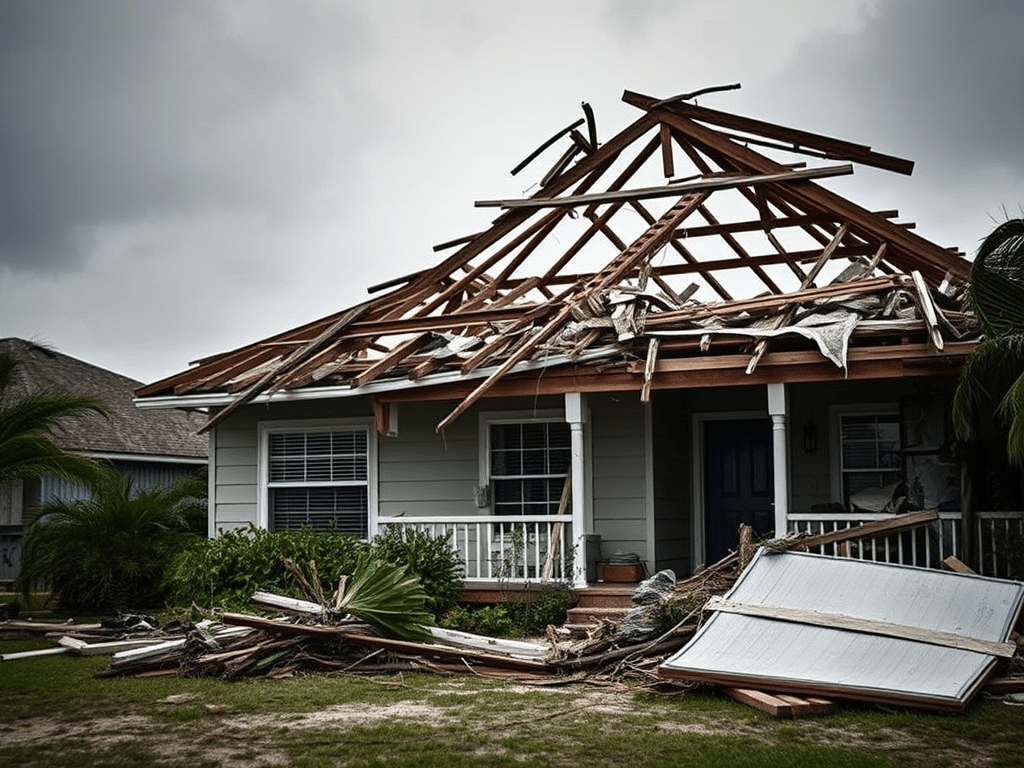
In January 2026, Florida’s Third District Court of Appeal issued a significant decision for hurricane-loss litigation: Kapson v. Homeowners Choice Property & Casualty Insurance Company, Case No. 3D24-0363. The case arose from Hurricane Irma, but its implications reach far beyond any single storm.
For homeowners, insurers, and commercial policyholders navigating complex property losses involving multiple policies—wind, flood, and named-peril coverage—the opinion is a clear reminder that litigation strategy matters as much as coverage language. What you claim, how you claim it, and what other claims you make can all become evidence at trial.
The Dispute: One Loss, Three Policies, Competing Theories
After Hurricane Irma destroyed their home in the Florida Keys, Danny Kapson and Rose Noelle submitted claims under three separate policies:
- A flood policy
- A standard hazard policy
- A named-peril (wind-only) policy issued by Homeowners Choice
The flood insurer paid $222,800 without dispute. Homeowners Choice acknowledged some wind damage—specifically to the roof and trusses—and paid approximately $38,000.
Kapson and Noelle then sued Homeowners Choice for breach of contract, advancing an all-or-nothing theory: wind destroyed the home before flooding or storm surge occurred, meaning all damages should be covered under the wind policy.
Homeowners Choice disagreed, relying on anti-concurrent causation language and contending that the remaining damage resulted from flood or storm surge—perils expressly excluded under the policy.
The case went to trial. The jury rejected the homeowners’ theory and returned a defense verdict. On appeal, the homeowners challenged several trial rulings, most notably the admission of evidence that they had made—and received payment on—a flood insurance claim.
The Third District affirmed across the board.
Why the Flood Claim Evidence Mattered
The appellate court focused on a narrow but critical evidentiary issue: whether the jury was permitted to hear that the homeowners sought and received flood insurance benefits for the same loss.
The answer was yes.
In a named-peril policy case, the insured bears the burden of proving that the loss was caused by a covered peril—here, wind. Once that burden is met, the insurer is entitled to challenge causation with evidence that the damage resulted from an excluded peril.
Evidence that the homeowners submitted a flood claim—and were paid under a policy that only responds to flood damage—was directly relevant to causation. It undermined the plaintiffs’ all-or-nothing narrative and supported the insurer’s position that flooding, not wind, caused much of the loss.
Importantly, the trial court excluded the amount of flood benefits received. The jury heard that a flood claim was made and paid—but not how much. That distinction mattered.
Why the Evidence Was Not Barred
The homeowners argued that the flood-claim evidence should have been excluded under several well-known doctrines. The Third District rejected each argument.
First, section 90.408, Florida Statutes—the rule barring evidence of settlements or compromises—did not apply. The record showed no dispute with the flood insurer. The flood carrier simply paid what it owed under the policy. Florida courts have long recognized that routine payment of undisputed insurance benefits is not a “settlement.”
Second, the evidence was offered to prove causation, not liability or damages. Section 90.408 does not bar evidence offered for a permissible purpose such as rebutting a party’s theory of the case.
Third, the collateral source evidentiary rule did not apply. Even where that rule is recognized, it does not bar evidence of collateral payments when relevant to liability or when necessary to prevent the jury from being misled. Here, excluding the flood-claim evidence would have allowed the plaintiffs to present a distorted version of the loss.
The Bigger Picture: Strategy, Consistency, and Credibility
What makes Kapson important is not the hurricane or the specific policies—it is the reminder that litigation is cumulative.
When multiple policies are in play, claims made to one insurer do not exist in a vacuum. They can—and often will—become evidence in disputes with another insurer. Courts are not blind to the practical realities of insurance claims, and juries are entitled to hear facts that bear directly on causation.
This case also underscores the danger of absolutist trial theories. An all-or-nothing approach can be powerful—but it leaves little room for nuance, and it invites rebuttal with equally concrete evidence.
Why This Decision Matters Going Forward
Florida property insurance litigation is increasingly technical, evidentiary, and hard-fought. Courts are enforcing policy language, evidentiary rules, and burdens of proof with rigor. Appeals like Kapson shape how future cases will be tried—long before opening statements.
For policyholders, the lesson is preparation and consistency. For insurers, it is documentation and causation analysis. And for both sides, it is the recognition that success often turns on early strategic decisions that later become locked into the record.
Cases like Kapson are rarely won or lost on emotion. They are won—or lost—on evidence, framing, and credibility.
Those are trial skills. And they matter.
 Donner Law Firm