
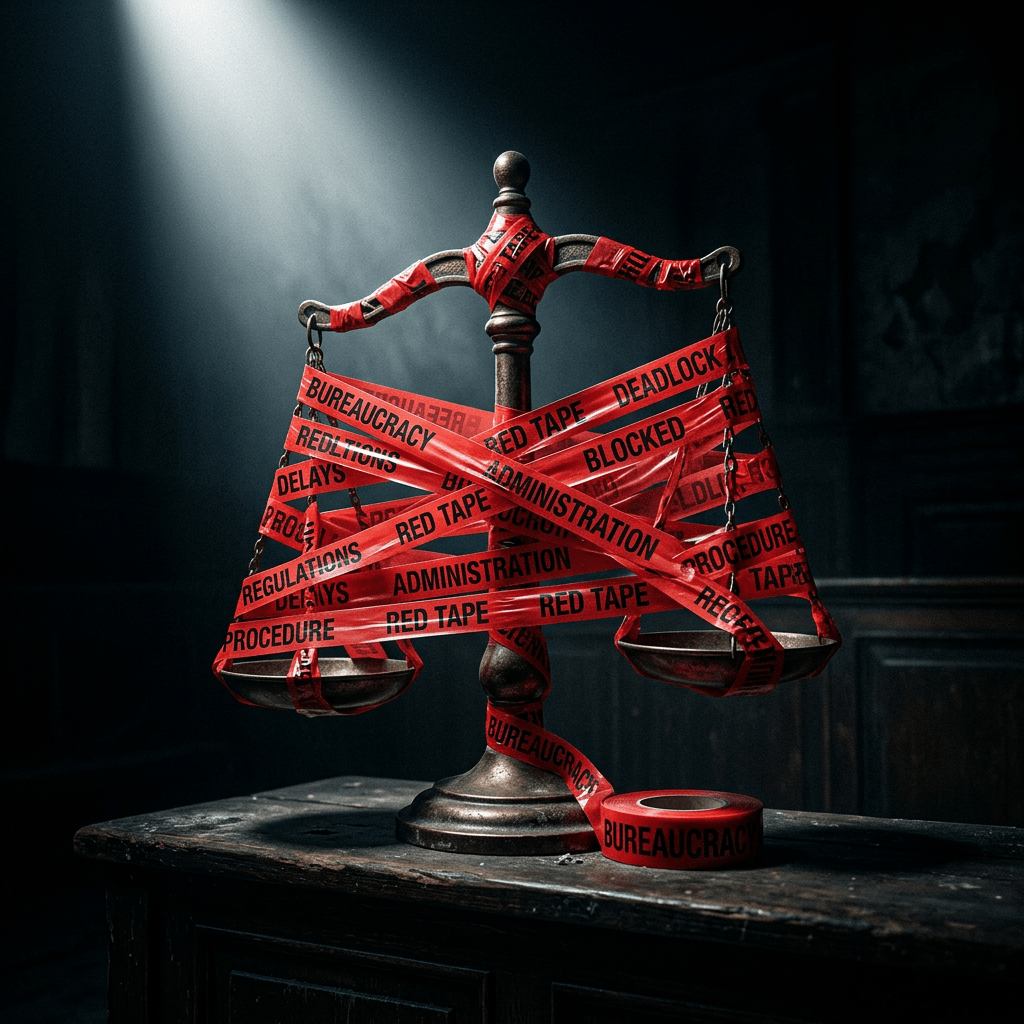
By Jeffrey T. Donner, Esq.
Florida lawyers are taught—at least in theory—that we practice in a common-law system. That proposition used to mean something. It meant that courts were not merely bureaucratic intake centers. Judges were not merely statutory clerks. Lawyers were not merely compliance officers filling out forms before they could ask a court to hear a dispute. The common law was built on judicial reasoning, precedent, analogy, experience, and the disciplined application of legal principles to actual human controversies.
That was the system we inherited from England. Florida itself expressly adopted the common and statutory law of England “down to the 4th day of July, 1776,” subject to constitutional and statutory limitations. § 2.01, Fla. Stat. The Florida Constitution likewise says, in direct and powerful language: “The courts shall be open to every person for redress of any injury, and justice shall be administered without sale, denial or delay.” Art. I, § 21, Fla. Const.
But in modern Florida civil practice, that guarantee often feels more ceremonial than operational. The courthouse doors may still be physically open. The filing portal may accept PDFs. But the practical right to file a lawsuit and have a judge or jury decide it has been burdened by layer after layer of presuit procedures, statutory conditions, administrative certifications, mandatory notices, waiting periods, expert corroboration requirements, and local procedural innovations. The result is a system that increasingly resembles not the English common law, but a continental code system—one in which every step must be legislatively or administratively prescribed before a citizen may obtain judicial relief.
That comparison is not perfect. Florida is not France. We do not literally operate under the Napoleonic Code. But the analogy is useful because it captures the direction of travel. The common-law tradition is generally based on precedent, judicial reasoning, and adversarial development of law, while civil-law systems are characterized by comprehensive codes that attempt to specify the applicable rule and procedure in advance. One comparative-law summary puts the distinction simply: common law relies heavily on precedent and judicial decisions, while civil law is “codified” through comprehensive, continuously updated legal codes.
That is the problem. We still call ourselves a common-law jurisdiction, but increasingly we behave like a code jurisdiction. The judge’s function becomes smaller. The statute book becomes larger. The lawyer’s work becomes less about judgment and more about procedural ritual. The question is no longer simply: did the defendant commit a legal wrong, and can the plaintiff prove it? The question becomes: did the claimant send the right notice, to the right address, with the right attachment, at the right time, using the right form, after obtaining the right preliminary opinion, before filing the complaint, while using the right certification language?
That is not access to courts. That is access to procedure.
I. The Common-Law Courthouse Was Not Supposed to Require a Permission Slip
The classic common-law idea is straightforward: if a person has been wronged, that person may file a complaint, invoke the jurisdiction of a court, and ask a neutral tribunal to resolve the dispute. Weak cases may be dismissed. Frivolous cases may be sanctioned. Legally insufficient cases may be resolved on a motion to dismiss. Factually unsupported cases may be resolved on summary judgment. Bad-faith filings may be punished under § 57.105, Florida Statutes, the court’s inherent authority, or the Rules Regulating The Florida Bar.
Those tools already exist. They are not theoretical.
Florida’s sanctions statute, for example, authorizes attorney’s fees where a party or lawyer knew or should have known that a claim or defense was unsupported by material facts or by then-existing law. § 57.105(1), Fla. Stat. It also authorizes sanctions for conduct taken primarily for unreasonable delay. § 57.105(2), Fla. Stat.
So the question is not whether courts lack tools to police frivolous litigation. They have tools. The question is why modern lawmaking so often assumes those tools are inadequate and then builds additional barriers before the courthouse may be used at all.
The Florida Supreme Court’s decision in Kluger v. White, 281 So. 2d 1 (Fla. 1973), remains the key starting point. Kluger held that where access to courts existed under pre-Declaration statutory law or became part of Florida common law, the Legislature may not abolish that right without providing a reasonable alternative, unless it can show an overpowering public necessity and no alternative means of meeting that necessity.
That principle should matter. It should matter especially when the Legislature or the courts create rules that do not merely regulate how cases proceed, but delay, burden, or condition whether they may be filed at all.
II. Medical Malpractice Presuit: The Courthouse Door With a Doctor Standing in Front of It
Florida’s medical malpractice presuit framework is the most obvious example. Chapter 766 does not merely require a plaintiff to plead a claim. It requires a claimant to conduct a presuit investigation, obtain corroboration from a medical expert, serve presuit notice, wait through a statutory investigation period, participate in informal presuit discovery, and satisfy procedural conditions before the ordinary lawsuit may proceed.
Section 766.104 provides that no action for personal injury or wrongful death arising out of medical negligence may be filed unless counsel has made a reasonable investigation and the initial pleading contains a certificate of counsel that the investigation gave rise to a good-faith belief that grounds exist for an action against each defendant. The statute further provides that good faith may be shown by a written expert opinion that there appears to be evidence of medical negligence.
Section 766.106 requires presuit notice before filing a complaint for medical negligence, and § 766.203 requires the claimant to conduct an investigation before giving that notice. The claimant must also provide corroboration through a verified written medical expert opinion supporting reasonable grounds for the claim.
That is a profound departure from ordinary civil litigation. In a car crash case, a slip-and-fall case, a legal malpractice case, a commercial fraud case, or a construction defect case, the plaintiff may file a complaint. The defendant may then attack it. The court may then adjudicate the sufficiency of the claim. But in medical malpractice, Florida has effectively placed a professional gatekeeper in front of the courthouse.
The stated policy rationale is familiar: screen out frivolous claims, encourage early resolution, reduce insurance costs, and avoid unnecessary litigation. Those are legitimate public-policy objectives. But public-policy objectives are not constitutional blank checks. The common-law question is whether the court system already has adequate mechanisms to screen meritless claims after filing. The answer is yes. Motions to dismiss, motions for summary judgment, expert-witness requirements, sanctions, fee-shifting, Daubert, and trial itself all exist to separate legitimate claims from illegitimate ones.
Florida appellate courts have recognized that Chapter 766’s presuit rules must be construed in favor of access to courts. In Weinstock v. Groth, 629 So. 2d 835 (Fla. 1993), the Florida Supreme Court construed the medical-malpractice presuit requirement narrowly, stating that restrictions on access to courts must be construed in favor of the constitutional right. In Kukral v. Mekras, 679 So. 2d 278 (Fla. 1996), the Court likewise emphasized that medical-malpractice presuit statutes should, where possible, be construed in a manner that favors access to courts.
But that interpretive rule only partially solves the problem. It softens the statutory machinery; it does not answer the larger constitutional question. The larger question is whether the machinery should exist in the first place when it operates as a precondition to filing suit.
At some point, a presuit screening requirement stops being mere procedure and becomes a partial substitution of legislative process for judicial process. It tells the citizen: before a judge may hear you, before a jury may decide your facts, before the adversarial system may work, you must first satisfy a statutory checklist created by the Legislature.
That is legislative aggrandizement of judicial power. It is the Legislature deciding not merely what substantive law governs, but how much private process a citizen must complete before the judicial branch may even be invoked.
III. The AI Certification Problem: A New Procedural Ritual for an Old Ethical Duty
The same impulse now appears in the judiciary’s reaction to generative artificial intelligence.
Miami-Dade’s Eleventh Judicial Circuit Administrative Order No. 26-04 requires any attorney or self-represented litigant who uses generative AI in preparing a pleading, motion, memorandum, response, proposed order, or other court record to disclose that use “on the face of the filing.” The order requires a certification stating that generative AI was used and that all factual assertions, legal authority, and citations have been independently reviewed and verified. The order also threatens sanctions for noncompliance, including striking the filing, denial of relief, monetary sanctions, contempt, and referral to The Florida Bar.
The concern is not imaginary. AI can hallucinate. It can generate fake cases. It can misstate holdings. It can invent quotations. Florida courts have already dealt with filings containing nonexistent authorities. In Takefman v. The Pickleball Club, LLC, the Third District addressed fake or hallucinated case citations and required the litigant to show cause why sanctions should not be imposed. The court correctly observed that opposing counsel and courts should not have to parse citations and parentheticals to determine whether cases exist and whether they support the propositions asserted.
That part is easy. Fake cases are intolerable. Misstated law is intolerable. A lawyer who files a motion containing hallucinated authority has failed at the most basic level of lawyering.
But the solution is not to require lawyers to announce their drafting tools on the face of every filing.
The lawyer’s signature already means something. The lawyer already owns the filing. The lawyer already has a duty of candor. The lawyer already has a duty of competence. The lawyer already may not cite fake cases. The lawyer already may not misrepresent authority. The lawyer already may be sanctioned for unsupported claims or defenses. The lawyer already may be disciplined for dishonesty or incompetence.
The Florida Bar’s own Ethics Opinion 24-1 recognizes the correct framework. Lawyers may use generative AI, but they must protect confidentiality, provide accurate and competent services, avoid improper billing, and verify that AI use is consistent with professional obligations. The opinion specifically notes that lawyers remain responsible for their work product and professional judgment.
That is the right rule.
The problem is not AI. The problem is lawyer responsibility. AI is a tool. It is not a lawyer. It is not a substitute for professional judgment. It is not an excuse for fake citations. But it is also not categorically different from Westlaw, Lexis, Google, form banks, treatises, prior motions, law clerks, paralegals, younger associates, dictation software, grammar tools, or any other aid that lawyers have always used to produce legal work.
No one requires a lawyer to certify: “Westlaw was used in the preparation of this filing.” No one requires a lawyer to disclose: “A first-year associate drafted the first version of this motion.” No one requires a lawyer to announce: “Counsel used a prior form bank, a treatise, Google Scholar, a law review article, and a paralegal-prepared chronology.” No one requires a lawyer to disclose whether the first draft was dictated, typed personally, assembled from prior briefs, or revised from an associate’s outline.
Nor should they.
The method by which a lawyer creates a motion is ordinarily work product. It reflects research paths, mental impressions, drafting strategy, delegation choices, technology choices, and editorial judgment. A filing is not less counsel’s work because counsel used a tool to draft it. It is counsel’s work because counsel filed it, signed it, and stands behind it.
The irony is that AO 26-04 itself states that AI-generated content is deemed the work product of the filing party. Yet the same order requires disclosure of the tool used to create that work product. That tension is not incidental. It is the whole problem. The order recognizes that the lawyer owns the work, but then demands a public disclosure about how the work was produced. (Florida Courts)
That is form over substance.
IV. The Panic Over AI Is Really a Panic Over Lawyer Competence
The legal profession has always been suspicious of new technology. Lawyers resisted email. Lawyers resisted e-filing. Lawyers resisted electronic signatures. Lawyers resisted remote hearings. Lawyers resisted cloud storage. Lawyers resisted laptops in court. Lawyers resisted online legal research. Lawyers resisted everything until it became unavoidable, and then pretended it had always been normal.
AI is simply the newest object of professional anxiety.
Some lawyers and judges will see “AI” and assume the work is bad. Others will see AI and assume the work is magically authoritative. Both reactions are wrong. AI is neither garbage nor God. It is a tool that can produce useful work when directed by a competent lawyer and dangerous work when used carelessly by an incompetent one.
That distinction matters. A careful lawyer using AI may produce better, clearer, more organized, and more thoroughly checked work than an overworked lawyer manually cutting and pasting from old motions. A careless lawyer using AI may file fake cases. But a careless lawyer without AI may also miscite cases, exaggerate holdings, omit adverse authority, misquote the record, or recycle a bad form.
The ethical issue is not the technology. The ethical issue is verification.
A lawyer who files a document must know what is in it. The lawyer must verify the cases. The lawyer must verify the record citations. The lawyer must make sure the argument is legally supportable. That obligation existed before ChatGPT. It existed before Westlaw. It existed before Lexis. It existed when lawyers used books, pocket parts, digests, citators, and handwritten notes.
Indeed, many good lawyers have lived their entire careers in fear of misciting a case or overstating a holding. That fear is healthy. It is part of legal craftsmanship. It is also precisely why the AI certification rule is misdirected. The lawyer who already checks citations will continue checking citations. The lawyer who does not check citations is already violating professional duties. The certification adds theater. It does not add judgment.
V. Procedure Should Serve Justice, Not Replace It
The deeper connection between medical-malpractice presuit statutes and AI certification orders is not obvious at first. One concerns access to the courthouse. The other concerns disclosure of drafting technology. But they arise from the same institutional instinct: distrust lawyers, distrust litigants, and solve the perceived problem by adding a new required step.
That is how procedure metastasizes.
A problem appears. A judge, Legislature, committee, or administrator responds by creating a form, certificate, waiting period, affidavit, disclosure, cover sheet, safe harbor, notice, or checklist. The new rule is always defended as reasonable. It is always described as narrow. It is always justified by a real or imagined abuse. And then it becomes permanent. The statute book gets larger. The rule book gets larger. The practice of law becomes more clerical and less intellectual.
This is not how common-law systems are supposed to develop. Common law is supposed to grow through cases. Courts decide real disputes. Bad arguments lose. Good arguments sometimes become doctrine. Procedural rules should facilitate that process, not smother it.
The more we codify every perceived abuse, the more we teach judges and lawyers to stop thinking. The statute says what it says. The administrative order says what it says. The form requires what it requires. The certification must be included because the certification must be included. At that point, legal reasoning gives way to compliance culture.
That may be efficient for bureaucrats. It is not justice.
VI. The Constitutional Question
The Florida Constitution’s access-to-courts clause should not be reduced to a museum piece. It should mean that a person with a recognized injury may invoke the judicial power without unnecessary, disproportionate, or protectionist barriers.
Reasonable procedural regulation is permissible. No serious lawyer disputes that. Statutes of limitation, pleading rules, service rules, jurisdictional rules, and sanctions rules all have legitimate roles. The question is one of degree and function. Does the rule organize litigation after the courthouse is invoked, or does it condition whether the courthouse may be invoked at all? Does the rule help the court adjudicate disputes, or does it outsource the court’s screening function to presuit bureaucracy? Does the rule protect the integrity of filings, or does it compel disclosure of attorney work product and drafting methodology?
Medical-malpractice presuit statutes raise the first problem. They condition access to court on presuit expert corroboration and procedural compliance. AI certification orders raise the second problem. They require lawyers to disclose the use of a drafting and research tool even though the lawyer’s signature, ethical duties, sanctions exposure, and professional responsibility already impose accountability.
Both reflect a larger trend: the conversion of the courthouse from a forum of adjudication into a checkpoint of procedural compliance.
That trend is backwards.
The courthouse is where disputes are supposed to be resolved. It is not supposed to be the final room in an administrative maze.
VII. Conclusion
Florida does not need more procedural theater. It needs more judicial courage.
If a lawyer files a motion with fake cases, sanction the lawyer. If a complaint is legally insufficient, dismiss it. If a claim lacks evidentiary support, enter summary judgment. If a party or lawyer litigates in bad faith, award fees under § 57.105. If a lawyer lies to a court, refer the lawyer to The Florida Bar.
But do not pretend that every new perceived problem requires another certification, another presuit condition, another mandatory notice, another procedural obstacle, or another public disclosure of how a lawyer created work product.
The common-law courthouse was not built on permission slips. It was built on the right to be heard, the discipline of adversarial testing, the judgment of courts, and the constitutional promise that courts shall be open for redress of injury.
Florida should remember that promise before it codifies it out of existence.
Timely Update: I received this email from a court clerk as I was publishing this article:
___________________________________
Missing the codes needed for signing and dating the order. The case number does not match. Double check the case numbers on the documents.
Please use a template from jud4.org
We rejected a proposed order on 5-12-2026. You can read the rejection notice in the rejection email and see how to correct the formatting.
If you have any issues, you can also email me copies of the orders and I can assist in the formatting too.
The JJJJ gets Right Justified. NO spaces in front of the JJJJ code, NO tabs NO indents. Indent must be set to ZERO for the JJJJ code. Standard 1-inch margins are a must.
Hello,
Please be advised, your Proposed Document submission for this case has been REJECTED due to the following reason(s):
IMPROPER FORMAT
PLEASE READ THE DIRECTIONS BELOW CAREFULLY AND REVIEW THE PROVIDED MATERIAL IN THE LINK BELOW. PLEASE USE ONE OF THE NEW TEMPLATES IN THE LINK FOR PROPER CODE PLACEMENT & FORMATTING.
It is very important to pay attention to the templates in the link BELOW.The placement of the DDDD and JJJJ codes is CRUCIAL. The Judges Signature Code, JJJJ, needs to be Right Justified for proper spacing. No TABs or INDENTs in front of the JJJJ code. Margins must be standardized at ONE INCH ALL AROUND. Failure to follow these instructions, will result in receiving another rejection notice. Please use template on website to avoid any discrepancies and ensure your proposed order will be approved.
Review the proposed order formatting instructions and material on the Fourth Judicial Circuit website: https://www.jud4.org/proposed-orders-efiling, and re-submit.
- Please DO NOT use the Certificate of Service sentence or the MMMM or AAAA codes in the document. We no longer support these codes.
- No underlines or Bolds are needed with any of the codes.
- No Section Breaks, No Column Breaks, No Page Breaks, No images.
- No Macros or Fill In The Blanks.
Make sure the letters DOCX do NOT appear in the title (naming) of the proposed order.
- But the proposed order must be in DOCX format.
Please let us know if you have any questions or if we can be of any additional assistance. If you have further questions, you can email me.
Thank you!
Larry Ashley
Court Administration IT
Duval County Courthouse, Jacksonville, FL – 32202
Larry Ashley
Courthouse IT
4th Judicial Circuit
Duval County Courthouse
501 W. Adams St.
Jacksonville, FL 32202
_______________________________________
Instead of dealing with such nonsense, a lawyer should be able to simply email a proposed order (an unopposed order) to a judicial assistant and ask for the proposed order to be entered by the judge. The JA and the judge can do the formatting however they like.
 Donner Law Firm