
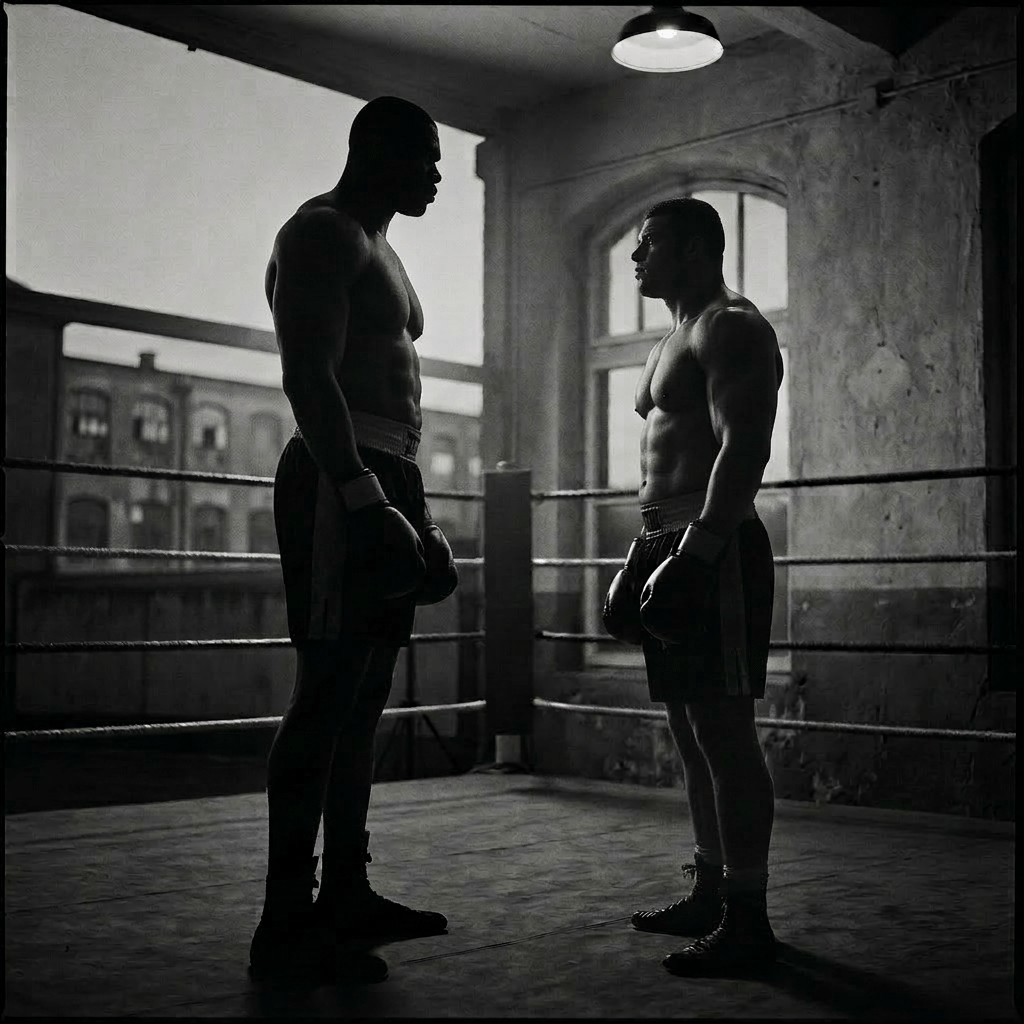
A Trial Lawyer on Boxing: The Heavyweight Division Has Outgrown Itself
By Jeffrey T. Donner, Esq.
May 23, 2026
Frank Sanchez knocking out Richard Torrez Jr. should force boxing to confront a problem it has avoided for too long: the heavyweight division is no longer one division.
It is an open-ended size category pretending to be a fair weight class.
Sanchez officially weighed 240.4 pounds. Torrez officially weighed 229.5. On paper, that is about an 11-pound gap. Some people will say that is nothing at heavyweight. They will say heavyweights have always fought men of different sizes. They will say the whole point of heavyweight boxing is that there is no ceiling. The Sanchez-Torrez fight was a heavyweight bout, and Sanchez stopped Torrez by knockout 55 seconds into the second round. (X (formerly Twitter))
But that easy answer misses the point.
The scale does not tell the whole story. Natural size matters. Bone structure matters. Frame matters. A 229-pound man who is built as big as he can reasonably be is not the same thing as a naturally larger man who happens to weigh 240. Two fighters can be close enough on the official weigh-in sheet and still look like they belong in different physical categories once the bell rings.
That is especially true above 200 pounds.
Richard Torrez Jr. is not small. He is a thick, muscular, powerful, 6-foot-2 heavyweight. He is not a blown-up light heavyweight. He is not a cruiserweight taking a foolish payday. He is a legitimate heavyweight by almost any historical understanding of the word.
And that is exactly the problem.
A man like Torrez is too big to get under 200 pounds without doing something unnatural to his body. But he is not naturally built like the modern giants who live in the 240s, 250s, 260s, and beyond. So he ends up in boxing’s no-man’s land: too big for cruiserweight, too small for the super-heavyweight reality that now hides inside the professional heavyweight division.
That is not just Torrez. Jake Paul, from a pure body-size standpoint, illustrates the same problem. Put aside whether people like him, hate him, or think he is a “real boxer.” A muscular 6-foot-1 or 6-foot-2 man who weighs 210 to 225 pounds in shape is a large man. In almost any ordinary context, he is huge. Historically, he would have been a heavyweight.
Today, that same man can be forced into the ring with a naturally gigantic heavyweight who is 6-foot-5, 6-foot-6, 250, 260, or 270 pounds.
That is not a fair spread just because both men are over 200.
Boxing understands this everywhere else. A 154-pound junior middleweight does not get told to fight a 168-pound super middleweight because “greatness overcomes size.” A 160-pound middleweight does not get thrown in with a 200-pound cruiserweight because “styles make fights.” We make weight classes because boxing is dangerous enough when the men are properly matched.
Then, suddenly, at 200 pounds, the logic mostly stops.
Cruiserweight ends at 200. In much of professional boxing, heavyweight begins there and never ends. Even current championship listings still show the strange split: heavyweight is listed as either over 200 or over 224 depending on the sanctioning body’s recognition of bridgerweight, while cruiserweight remains 200 pounds. (DAZN)
That might have made more sense in an earlier era. It makes less sense now.
Joe Frazier fought barely above 200 pounds. Muhammad Ali often fought in the 210s and 220s. Mike Tyson, at his destructive peak, was roughly a 217-to-221-pound heavyweight. Those men were not small in their eras. They were the heavyweight division.
But the modern top end has changed.
Lennox Lewis was, in many ways, an early prototype of the modern super-heavyweight champion. When he fought Mike Tyson in 2002, Lewis was listed at 249 pounds and Tyson at 234. Lewis was not merely bigger. He represented the direction the division was going: elite skill attached to a much larger heavyweight frame.
Tyson’s late-career loss to Kevin McBride showed the issue even more bluntly. McBride was a 6-foot-6, 271-pound man. Tyson was no longer prime Tyson, and nobody should pretend he was. But the physical picture still matters. By then, the sport was already moving toward a world where the top of the heavyweight division was filled with much larger men.
That is the point.
It is not that a smaller heavyweight can never win. Oleksandr Usyk has proved that a brilliant smaller heavyweight can beat larger men. Evander Holyfield proved it before him. Mike Tyson proved it in his own way. Exceptional fighters can overcome size disadvantages.
But exceptions do not make a fair structure.
You do not design a sport around unicorns.
The sport has already admitted this in amateur boxing. Olympic-style boxing separates heavyweight from super heavyweight. At the 2024 Paris Olympics, men’s heavyweight was 92 kilograms, and super heavyweight was above 92 kilograms, which is roughly 202 pounds. Boxing already recognizes, at least in the amateur system, that a man just over 200 pounds and a much larger heavyweight are not necessarily the same kind of athlete.
Professional boxing has made only a partial move in that direction. The WBC created bridgerweight, and the WBA later approved its own version of the division, between 200 and 224 pounds. The name itself comes from Bridger Walker, the young boy who was injured while protecting his sister from a dog attack. That is not the problem. The problem is not the name. The problem is that the division has not become a real, fully accepted, consistently used part of professional boxing. (BoxingScene.com)
The idea behind bridgerweight is sound. In fact, the WBA’s own explanation for creating the division proves the point: the stated purpose was to avoid heavyweight bouts with excessive weight differences and to give “small heavyweights” the chance to compete against more balanced opponents. (World Boxing Association)
Exactly.
That is the problem I am talking about.
But a weight class does not become real merely because one or two sanctioning bodies create it. It becomes real when fighters use it, promoters make meaningful fights in it, fans recognize it, rankings matter, champions defend the belts, and top names see it as a legitimate destination rather than a temporary belt or a detour.
That has not really happened.
The WBC recognizes bridgerweight as 200 to 224 pounds. The WBA recognizes bridgerweight at 224 pounds. But the IBF and WBO have not followed in the same way, and current championship listings still show only WBA and WBC titleholders at bridgerweight, while the traditional divisions around it have broader recognition. (World Boxing Council)
The title history also shows how thin the division has been. Oscar Rivas won the inaugural WBC bridgerweight title in 2021. He made no defenses before the title became vacant. Lukasz Rozanski won the vacant WBC title in 2023 and made no successful defenses before losing it. Lawrence Okolie won it in 2024 and vacated it within months without defending it. Kevin Lerena later became WBC champion and made a defense in 2025. On the WBA side, Muslim Gadzhimagomedov became WBA bridgerweight champion in 2024. That is not nothing, but it is not yet a thriving division either. (Wikipedia)
That is why a fighter like Torrez is still stuck.
Technically, boxing has started to identify the problem. Practically, it has not solved it.
The division exists, but it has not become the place where the best 200-to-224-pound fighters naturally go. It has not become the obvious career lane for the muscular 6-foot to 6-foot-2 man who is too big for cruiserweight and too small for the modern giants. Until that happens, the solution is theoretical.
That is why the sport needs to think bigger.
The cleanest structure would be:
Cruiserweight: up to 200 pounds.
Heavyweight: 200 to 225 pounds.
Super heavyweight: 225 to 250 pounds.
Unlimited heavyweight: 250 pounds and above.
Maybe that third category is too much for boxing politics right now. Maybe there are not enough elite 250-plus-pound fighters to sustain a deep championship division. That is a fair debate.
But the basic point should not be controversial anymore. A 220-pound man and a 260-pound man are not the same thing.
And the modern sports world proves the larger point. Athletes have changed. Training has changed. Nutrition has changed. Strength and conditioning have changed. Recovery has changed. Global talent identification has changed. The bodies at the top of sports are different now.
Track and field shows this because the stopwatch does not care about nostalgia.
In 1987, Carl Lewis ran 9.93 seconds in the 100 meters at the World Championships in Rome, an equal-world-record-level performance at the time. Usain Bolt’s current world record is 9.58, set in 2009. (TDK)
That is not a small change. That is a different performance universe.
It is not just that the very best man is faster. The depth is different. In 2025, World Athletics listed 27 men at 9.95 or faster and 39 men under 10.00 in the 100 meters. In other words, marks that once sounded like world-record territory are now produced by dozens of elite sprinters in a single season. (worldathletics.org)
The college level tells the same story. The 2025 NCAA Division I outdoor qualifying list included Jordan Anthony at 9.75 with a slightly over-the-limit wind, Abdul-Rasheed Saminu at a legal 9.86, and multiple college sprinters under 10 seconds. (TFRRS)
That does not mean Carl Lewis was not great. He was one of the greatest sprinters who ever lived. It means the competitive environment changed. A time that once stood at or near the top of the world is now part of a much deeper, faster, broader field.
The same thing has happened in boxing, just without a stopwatch making it impossible to deny.
The heavyweight division of 1985 cannot be casually compared to the heavyweight division of 2026. A 217-pound heavyweight in 1986 was not facing the same physical universe as a 217-pound heavyweight today. The name of the division stayed the same. The bodies changed.
That is why fighters like Torrez and Jake Paul are caught in the middle. They did not “lose the genetic lottery” in ordinary human terms. They are large, strong men. But for the current professional heavyweight structure, they are the wrong kind of large. They are big enough that 200 pounds is unrealistic, but not big enough to match the natural frame of the modern super-heavyweight.
That is the flaw.
The Sanchez-Torrez knockout made it visible. Torrez, a southpaw, appeared to get caught in a positioning mistake. He was hit clean, driven backward, and hit the canvas hard. He tried to get up and then fell back down in the unmistakable way fighters do when the nervous system has not recovered. I am not making a medical diagnosis. I am not a ringside doctor. But anyone who has watched boxing knows what that kind of knockout looks like.
It looked dangerous.
It looked like the kind of moment that should make people ask whether the structure still makes sense.
This is not to take anything away from Sanchez. He won. He did his job. Boxing is not a sympathy contest. If a fighter makes a mistake, the other fighter is supposed to punish him. Sanchez punished him.
But legal thinking teaches you to separate the result of one case from the fairness of the rule. A rule can be flawed even if someone wins under it. A system can be irrational even if both parties agreed to participate. A category can be outdated even if the contract says “heavyweight.”
That is where boxing is now.
The heavyweight division is not really one division anymore. It is several divisions stacked on top of each other and held together by nostalgia.
The sport should stop pretending otherwise.
A 205-pound fighter, a 225-pound fighter, a 250-pound fighter, and a 275-pound fighter are not all the same thing. Boxing knows this in every other weight range. It just refuses to admit it at heavyweight because “heavyweight champion of the world” is the sport’s most valuable mythology.
I understand the mythology. I like the mythology. The heavyweight champion of the world still means something. It should mean something.
But prestige is not a reason to keep an irrational structure forever.
Make 200 to 225 the true modern heavyweight division. Make 225 to 250 super heavyweight. If the sport can support it, create an unlimited class above 250. If not, at least admit that 200 to 225 deserves to be a real division with real champions, real promotion, and real respect.
That would not destroy boxing. It would make boxing more rational.
It would let fighters develop properly. It would give men like Torrez a real career lane. It would let fans compare fighters within more meaningful physical categories. It would reduce the pressure on smaller heavyweights to take fights against men who are not merely heavier, but structurally larger.
And it would still let the great ones move up.
That is how boxing works everywhere else. A lightweight can chase welterweight greatness. A middleweight can move to super middleweight. A cruiserweight can move to heavyweight. The great fighters can still take the risk. But the risk should be a choice, not a structural trap.
Richard Torrez Jr. may come back. One knockout loss does not end a career. Fighters lose. Fighters rebuild. Sometimes a bad night is just a bad night. Sometimes the first real disaster makes a fighter better.
But whatever happens to Torrez, the larger issue remains.
Boxing has a heavyweight problem.
Not because heavyweights are too big.
Because the division is too broad.
A 220-pound man is a big man.
A 250-pound man is a bigger man.
A 275-pound man is something else entirely.
Boxing should stop pretending otherwise.
 Donner Law Firm