
By Jeffrey T. Donner, Esq.
June 11, 2026
A lawyer’s note on time, billing, and professional boundaries
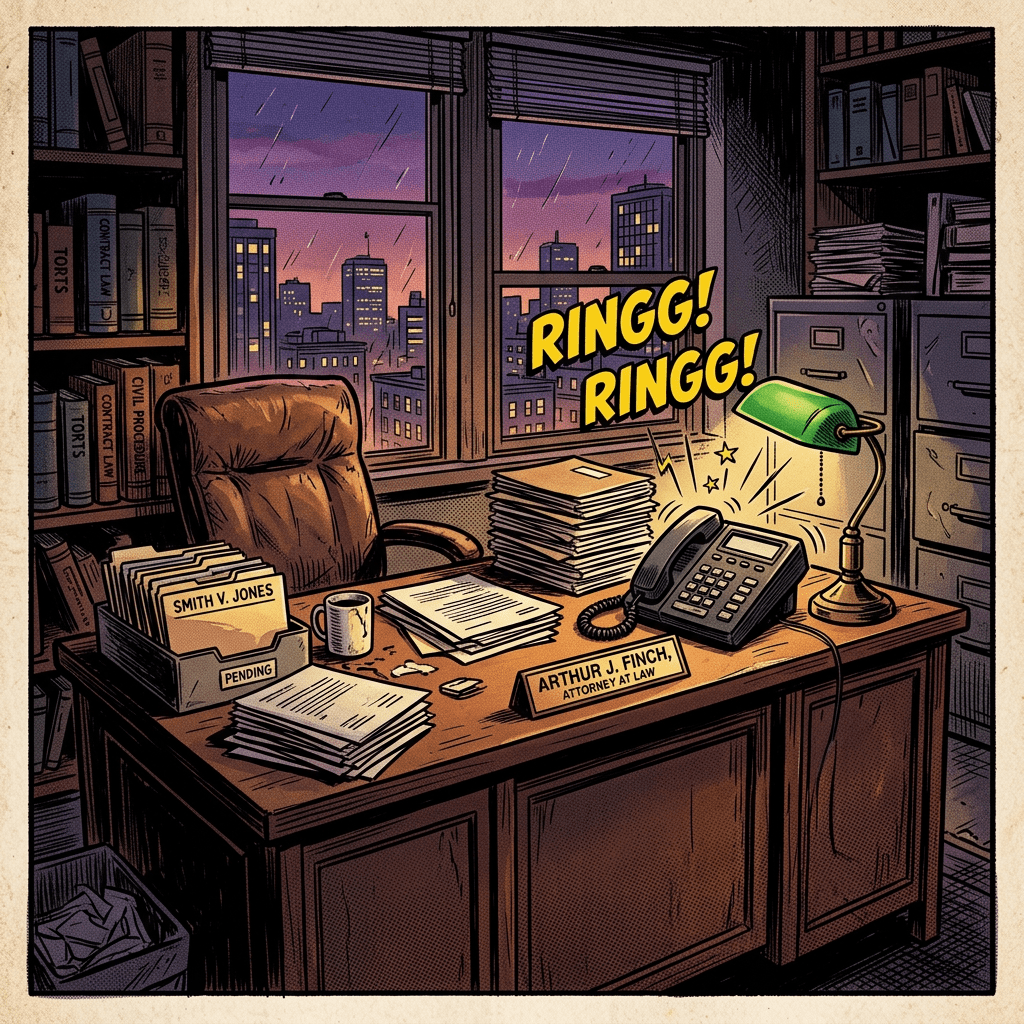
Every litigator knows the message: opposing counsel called and wants to “touch base.” On its face, that sounds harmless and sometimes it is. Lawyers should talk to each other when a real conversation can solve a problem, narrow an issue, or move a case toward resolution.
But over time, I have become more careful about unscheduled phone calls. Not because I do not want to communicate with other lawyers. Not because I think every issue needs to be handled by long formal emails. The reason is simpler: a phone call is work, and the value of that work is not always the same for both sides.
The economics of the call matter
Lawyers often speak as if professional courtesy requires immediate availability. I do not think that is right. Professional courtesy requires responsiveness, clarity, and good faith, but it does not require one lawyer to stop whatever he is doing because another lawyer decided it would be convenient to call at that moment.
This matters because lawyers in the same case may be operating under very different economic models. One lawyer may be billing by the hour to an insurance company, corporation, condominium association, or well-funded client. Another lawyer may be working on contingency, on a flat fee, under a capped fee, under a limited retainer, or in a practical situation where the client has limited ability to pay. The same one-hour call may be billable time for one lawyer and uncompensated overhead for the other.
That difference changes the practical meaning of the call. For one lawyer, the call may fit neatly into the billing day. For the other, it may be an interruption that does not move the case, does not generate a fee, and does not help the client. It may also carry a strategic cost if the conversation is unfocused, emotional, or designed mostly to test positions.
The insurance-defense example
This dynamic is especially familiar to anyone who has litigated against insurance-defense lawyers. Many insurance-defense lawyers work under heavy billable-hour expectations, often 2,000 hours or more per year. That is not a moral criticism of those lawyers. It is simply the structure of that practice area.
When an insurance-defense lawyer wants to spend an hour on the phone explaining why a plaintiff’s claim is unreasonable, the economics are not symmetrical. The defense lawyer may be billing for that discussion. The plaintiff’s lawyer, especially if working on contingency, may not be paid anything for the same hour unless the case ultimately resolves and money comes in the door.
That does not mean the call is always useless. Sometimes a candid phone call can move a case toward settlement. But if the defense offer is $10,000 and the plaintiff’s demand is $100,000, an hour-long lecture about why the claim is “not worth that” may not be productive. At some point, the better answer is to put a real offer in writing, schedule mediation, set the motion for hearing, or try the case.
Different billing models create different incentives
The point is not that hourly lawyers are bad or contingency lawyers are virtuous. Both systems have their own incentives and their own problems. The point is that communication between lawyers is affected by those incentives, whether we acknowledge it or not.
A lawyer who must bill a large number of hours every year may naturally view phone calls, conferences, reports, follow-up calls, and “strategy discussions” as part of the ordinary daily work of litigation. A lawyer whose fee depends on results may view the same activity more skeptically. That lawyer may ask, reasonably, whether the call is going to move the case or merely consume time.
This is not limited to plaintiff-versus-insurance-defense cases. It also comes up in business disputes, condominium cases, construction cases, probate disputes, and cases involving individual defendants who should not have been sued in the first place. In those cases, the cost of every unnecessary lawyer communication may fall on a person or small business that is already being damaged by the litigation itself.
A phone call should have a purpose
I am not arguing that lawyers should refuse to speak with each other. That would be impractical and often counterproductive. Some disputes are better handled by phone, and some professional relationships are preserved because lawyers can speak candidly without filing a motion over every disagreement.
But a phone call should have a purpose. If the call is about a concrete settlement proposal, a stipulation, a discovery issue, a hearing date, a dismissal, or a practical way to narrow the dispute, then it may be worth having. If the call is simply to “talk through the case,” repeat arguments already made in writing, or feel out the other lawyer without committing to any position, then it may not be a good use of time.
That is why asking for an agenda is not rude. It is a reasonable professional boundary. A short email saying, “Can you summarize what you want to discuss?” often makes the later call more useful. It also forces everyone to identify whether there is actually something to discuss.
The solo-lawyer problem
This issue is even more important for solo lawyers and small-firm lawyers. In a larger firm, an unscheduled call may be absorbed into a workday with associates, paralegals, and administrative support. In a solo practice, every interruption lands directly on the lawyer who is also drafting the motions, responding to discovery, preparing for hearings, answering clients, managing billing, and running the business.
That does not mean solo lawyers deserve special treatment. It does mean they have to be disciplined about time. If a solo lawyer takes every unscheduled call, the real legal work often gets pushed into the evening, the weekend, or the early morning.
There is also a mental cost to phone calls that lawyers do not always acknowledge. A call with opposing counsel requires focus, restraint, judgment, and careful listening. You have to be polite, protect the client, avoid saying too much, avoid agreeing to something imprecise, and still try to learn whether the call has any value. That is work, even if no pleading is being drafted and no hearing is taking place.
Written communication is sometimes cleaner
Email is not perfect. Lawyers can misuse email, write too much, posture unnecessarily, and create records that make resolution harder. A good phone call can sometimes avoid that problem.
But written communication has one major advantage: it forces precision. If a lawyer wants to discuss settlement, the lawyer can say so. If the issue is discovery, the lawyer can identify the request or deficiency. If the issue is dismissal of a party, the lawyer can explain the proposed path.
Once the purpose is clear, a call may make sense. The call can then be scheduled, limited, and productive. That is very different from allowing the day to be controlled by unscheduled calls that may or may not serve the client.
Professional courtesy is not unlimited access
I think lawyers sometimes mistake access for professionalism. They assume that because they are available to call, the other lawyer should be available to answer. But a lawyer’s first duty is to the client, not to another lawyer’s preferred communication style.
Professional courtesy does not require unlimited access. It requires timely responses, honest communication, and reasonable cooperation. It also requires respect for the fact that different lawyers and different clients are bearing the cost of litigation in different ways.
The better practice is simple. If you want to talk, say what the call is about. If the issue is important, explain why. If there is a proposal, put the basic proposal in writing first. If the call is likely to move the case, most lawyers will make time for it.
My own rule
My own rule is not that I never talk to opposing counsel. I do, and many of those conversations are useful. My rule is that I do not treat an unscheduled substantive phone call as an automatic obligation.
If the call has a clear client benefit, I will take it or schedule it. If the lawyer can explain the purpose in a short email, I can decide whether a call is worthwhile. If the call is likely to be an unfocused hour of argument, venting, or negotiation theater, then email is usually better.
That rule is not about being difficult. It is about protecting the client, protecting the workday, and keeping the case focused on actual movement rather than professional chatter. Litigation is already expensive enough without lawyers creating unnecessary time simply because a phone call feels easier in the moment.
So yes, lawyers should talk when talking helps. But the call should have a point, and it should respect the fact that time is not neutral. Depending on the case, the fee structure, and the client, one lawyer’s casual phone call may be another lawyer’s uncompensated work.
That is why the unscheduled phone call is not neutral.
 Donner Law Firm